Blog
Cutting Wheel Wholesaler in Delhi | Trusted Bulk Supplier
Picture this: you run a small fabrication workshop in Naraina, and it’s 7 PM on a Friday. Your team has three more MS pipes to cut before the weekend order ships out — and you’re down to your last cutting wheel. The nearest retail shop is closed. Sound familiar?
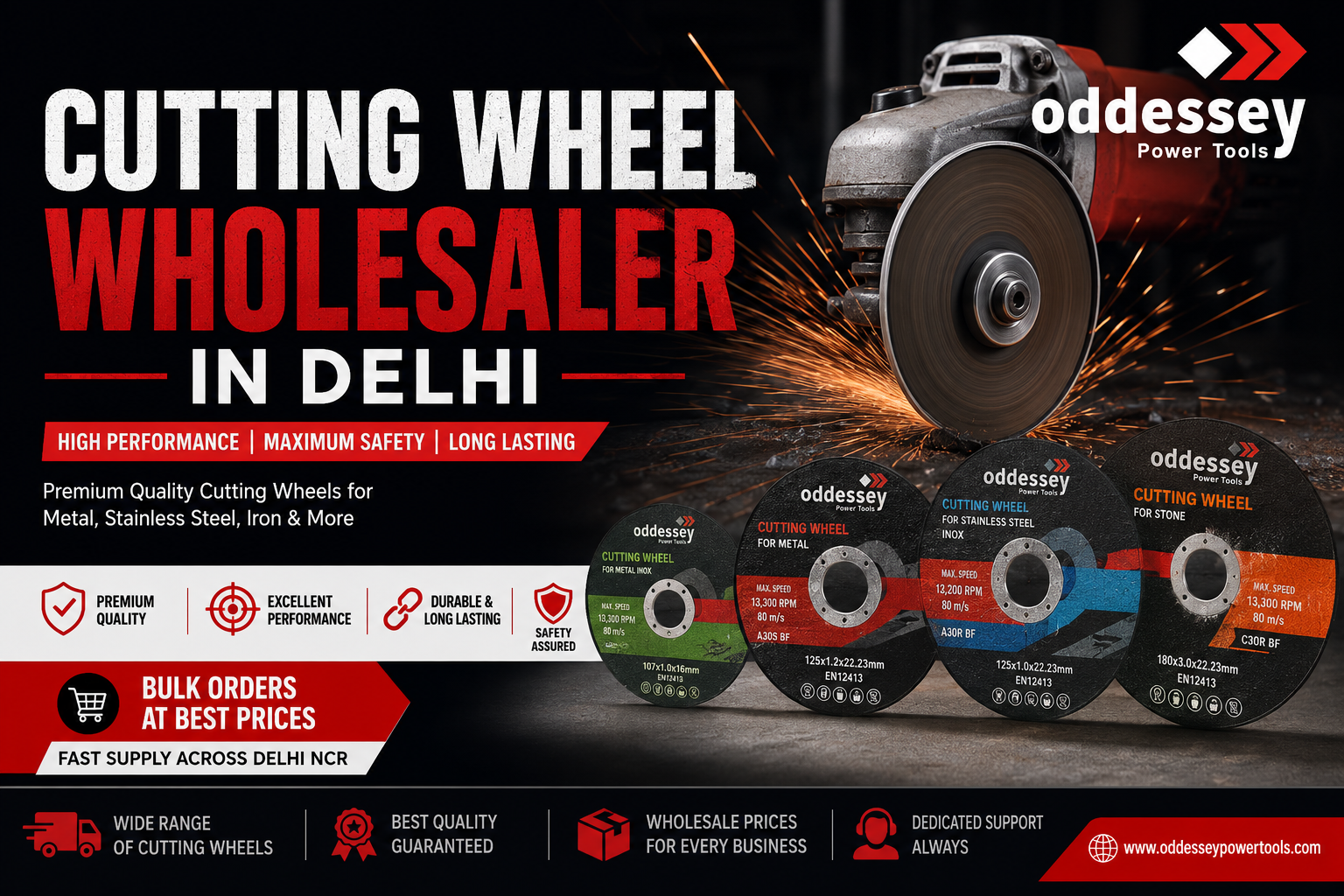
This is a scene that plays out almost every week for metal workshops, fabricators, and hardware retailers across Delhi NCR. The truth is, cutting wheels aren’t a “buy once in a while” item — they’re a consumable that gets used up fast, and running short at the wrong moment can stall an entire production line. That’s exactly why so many businesses in Delhi are moving away from retail purchases and turning to a reliable Cutting Wheel Wholesaler in Delhi for their regular supply.
In this guide, we’ll break down what makes wholesale buying smarter, what to look for in a supplier, and how a name like Oddessey Power Tools fits into that picture as a dependable, quality-first partner.
What Does a Cutting Wheel Wholesaler Actually Do?
A cutting wheel wholesaler isn’t just a shop with a bigger inventory. It’s a supplier that works directly with manufacturers or authorized distributors to bring abrasive cutting wheels — used for cutting metal, steel, stainless steel, tiles, and stone — to businesses in bulk, at prices that make sense for regular, high-volume use.
Think of the difference between buying a single loaf of bread from a bakery versus sourcing flour directly from a mill if you run a bakery yourself. Retail works fine for occasional needs. But if cutting wheels are part of your daily operations — whether you’re a fabricator, a construction contractor, an auto workshop, or a hardware retailer — wholesale sourcing changes the entire cost and convenience equation.
Who Actually Needs a Wholesale Supplier?
Wholesale cutting wheel sourcing isn’t limited to giant factories. In Delhi’s industrial pockets like Wazirpur, Mangolpuri, Okhla, and Bawana, the demand comes from a wide mix of buyers:
- Metal fabrication workshops and steel traders
- Construction and infrastructure contractors
- Automobile repair and body shops
- Hardware and tool retail shop owners looking to stock up
- Grill, gate, and furniture manufacturing units
- Industrial maintenance teams
Retail vs. Wholesale: Where’s the Real Difference?
Many first-time buyers assume the only difference between retail and wholesale is price. In reality, the gap runs much deeper — covering consistency, supply reliability, and even wheel quality.
Retail Buying vs. Wholesale Buying
| Factor | Retail Purchase | Wholesale Purchase |
| Price per unit | Higher, fixed MRP | Significantly lower on bulk orders |
| Supply consistency | Depends on shop stock | Reserved, planned inventory |
| Product authenticity | Risk of duplicate/local brands | Verified, certified stock |
| Delivery for bulk orders | Usually not available | Doorstep delivery across Delhi NCR |
| Business relationship | One-time transaction | Long-term account with credit options |
Note: Actual pricing and terms vary by order volume and supplier agreement.
Key Benefits of Choosing a Wholesale Supplier
Beyond the obvious cost savings, working with a trusted wholesaler brings advantages that directly impact your day-to-day operations:
- Better margins on resale: Retailers get room to price competitively while still earning healthy margins.
- No stock-outs: Bulk stock means your workshop or store never grinds to a halt mid-project.
- Wider product range: Access to different wheel sizes, thicknesses, and grades — from thin cutting discs to heavy-duty grinding wheels.
- Consistent quality: Genuine abrasive wheels perform predictably, reducing wastage and rework.
- Custom order quantities: Order according to your actual monthly usage instead of guessing.
Understanding Cutting Wheel Types Before You Buy
Not every cutting wheel is built for the same job, and this is where many buyers — especially those new to bulk purchasing — go wrong. Choosing the correct wheel type for the material and machine matters just as much as the price you pay.
Common Cutting Wheel Types & Their Uses
| Wheel Type | Best Used For | Common Thickness |
| Ultra-thin cutting wheel | Precision cuts on thin metal sheets, pipes | 1.0mm – 1.6mm |
| Standard MS cutting wheel | Mild steel rods, angles, general fabrication | 2.5mm – 3.2mm |
| Stainless steel (SS) wheel | SS pipes, kitchen equipment, railings | 1.6mm – 2.5mm |
| Heavy-duty grinding wheel | Surface grinding, weld smoothing | 6mm and above |
Note: Always match wheel specifications with your grinder’s RPM rating for safe operation.
How to Choose the Right Cutting Wheel Wholesaler in Delhi
Delhi’s wholesale hardware market is massive — and that means not every supplier holds the same standard. Here’s a simple step-by-step approach to vetting a wholesaler before you commit to a bulk order.
Step-by-Step Buying Process
| Step | What to Do |
| 1. Assess your usage | Calculate monthly wheel consumption by size and type |
| 2. Shortlist suppliers | Check certifications, catalog range, and years in business |
| 3. Request samples | Test cutting speed, wheel life, and finish quality |
| 4. Compare pricing & terms | Ask about bulk slabs, credit cycles, and delivery charges |
| 5. Place a trial order | Start with a moderate quantity before committing long-term |
| 6. Build a repeat supply plan | Set a monthly or quarterly reorder schedule |
Note: A trial order is the best way to judge real-world wheel performance before scaling up.
Tips & Best Practices for Bulk Buyers
- Buy according to actual consumption — over-ordering ties up cash and storage space unnecessarily.
- Store wheels properly — keep them in dry conditions, flat or upright as recommended, away from moisture and heat.
- Check the manufacturing date — abrasive wheels have a shelf life; older stock can be more brittle.
- Match wheel specs to your machine — using the wrong RPM rating is a common safety hazard.
- Build a relationship, not just a transaction — a long-term supplier will prioritize you during shortages or price hikes.
Do’s and Don’ts of Wholesale Cutting Wheel Buying
| Do’s | Don’ts |
| Verify ISI/quality certification | Don’t buy from unverified street vendors |
| Ask for a test sample first | Don’t commit to huge orders untested |
| Confirm delivery timelines in writing | Don’t rely on verbal promises alone |
| Store wheels in a dry, ventilated space | Don’t stack wheels near heat sources |
Note: Following these basics reduces wastage and keeps your workshop running safely.
Common Mistakes to Avoid
Even experienced buyers slip up when moving to wholesale for the first time. Here are the mistakes worth watching for:
- Chasing the lowest price only: Extremely cheap wheels often mean weaker bonding material, which wears out faster and can be unsafe at high RPM.
- Skipping the sample test: A wheel that looks fine on paper may perform poorly on your specific machine or material.
- Ignoring storage conditions: Wheels stored in humid warehouses degrade faster, leading to cracks and reduced lifespan.
- Not confirming after-sales support: A good wholesaler should stand behind their product if there’s a genuine quality issue in a batch.
Why Businesses Choose Oddessey Power Tools
At Oddessey Power Tools, the goal has always been simple — give Delhi’s fabricators, contractors, and hardware retailers a supply partner they can actually rely on, order after order. That means genuine, quality-tested cutting wheels, transparent bulk pricing, and a stock plan built around real business needs rather than one-off retail transactions.
Whether you’re a workshop owner trying to avoid mid-week stock-outs or a retailer looking to widen your margins with a steady wholesale rate, working with an established cutting wheel wholesaler in Delhi like Oddessey Power Tools means fewer surprises and more consistency in your day-to-day operations.
Frequently Asked Questions
1. What is the minimum order quantity for wholesale cutting wheels?
This typically varies by supplier and wheel size, but most wholesalers set a minimum carton or box quantity rather than single-piece orders. It’s best to confirm directly with your supplier.
2. Are wholesale cutting wheels lower quality than retail ones?
Not necessarily. Reputable wholesalers source from the same manufacturers as retail shops — the difference is in pricing structure and order volume, not product quality.
3. How long does a cutting wheel typically last?
This depends on the wheel’s thickness, the material being cut, and machine RPM. Thin cutting wheels used on hard metal will naturally wear faster than heavy-duty grinding wheels.
4. Can hardware retailers resell wholesale cutting wheels?
Yes, this is one of the most common use cases. Retailers buy in bulk at wholesale rates and sell individually or in small packs at retail pricing.
5. What safety precautions should I follow when using cutting wheels?
Always match the wheel’s RPM rating to your machine, wear proper eye and hand protection, and inspect wheels for cracks before use.
6. How do I place a bulk order with Oddessey Power Tools?
You can reach out directly through their contact channels to discuss your monthly requirement, get sample approval, and set up a recurring supply arrangement.
Final Thoughts
Sourcing cutting wheels shouldn’t be a last-minute scramble every time stock runs low. Moving to a trusted wholesale supplier gives your business predictability — in cost, in quality, and in supply — so you can focus on the actual work instead of worrying about what’s left in the storeroom.
If you’re a workshop owner, contractor, or retailer in Delhi NCR looking for a dependable cutting wheel wholesaler in Delhi, it’s worth having a conversation with a supplier who understands your volume and your timeline. Oddessey Power Tools is built around exactly that — steady supply, genuine products, and pricing that makes sense for businesses that cut metal every single day.