Blog
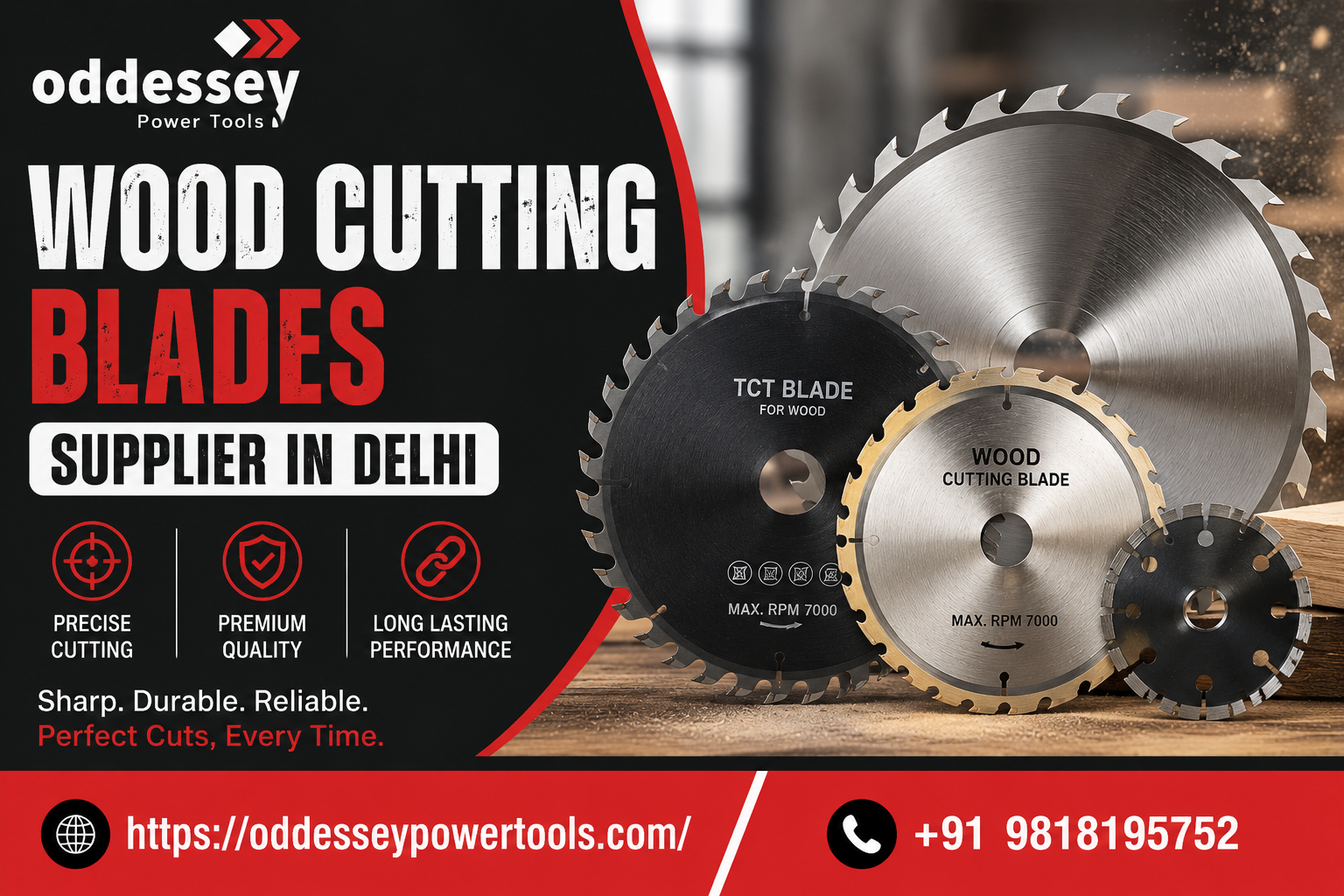
Wood Cutting Blades Supplier in Delhi: Trusted by Carpenters
If you have ever watched a skilled carpenter run a piece of plywood through a saw, you know that the cut itself tells a story. A clean, splinter-free edge speaks of a sharp, well-matched blade. A rough, chipped, or burnt edge usually means the blade was wrong for the job, or simply worn out. In woodworking, the blade is not a minor accessory — it directly decides cutting speed, finish quality, material wastage, and how long your power tool lasts under daily use.
This is why so many carpenters, furniture manufacturers, and interior contractors in the city pay close attention to where they source their cutting consumables from. Finding a dependable Wood Cutting Blades Supplier in Delhi is not just about convenience; it is about consistency. When a workshop is running multiple projects at once, the last thing anyone wants is a blade that dulls quickly, vibrates during a cut, or doesn’t fit the machine it was bought for. This article walks through what actually makes a wood cutting blade good, how to choose the right one for different materials, and what to look for in a supplier you can rely on over the long term.
Why Quality Wood Cutting Blades Matter
The quality of a blade shows up in almost every stage of a woodworking job. A well-made blade produces cleaner cuts with minimal chipping, especially on veneered or laminated surfaces where even a slight tear-out can ruin an otherwise finished panel. It also cuts faster and with less resistance, which reduces strain on the motor of the power tool and lowers the risk of kickback.
There is also a cost angle that often gets overlooked. A blade that struggles to cut smoothly forces the operator to push harder or make multiple passes, which increases material wastage and slows down production. Over time, a poor-quality blade also wears out faster, meaning more frequent replacements and higher long-term spending — even if the initial price looked attractive. For any workshop working on tight timelines, a good blade is really a productivity tool, not just a cutting accessory.
What Makes a Good Wood Cutting Blade?
Not all blades are built the same, and understanding a few core specifications makes a real difference when buying.
Blade material is the starting point. Most professional-grade wood cutting blades today use tungsten carbide tips, commonly referred to as TCT wood cutting blades. Carbide-tipped blades hold their edge far longer than plain steel blades and handle both natural wood and engineered boards without dulling quickly.
Tooth design and count affect the type of cut you get. Blades with fewer, larger teeth are generally suited for fast rip cuts along the grain, while blades with a higher tooth count produce smoother, finer cuts — ideal for cross-cuts or finished furniture edges. The angle of the teeth, known as the hook angle, also influences how aggressively the blade feeds into the material.
Kerf width, the thickness of the cut the blade makes, matters more than people expect. A thin-kerf blade removes less material and puts less load on the motor, which is useful for smaller or portable tools, while a standard-kerf blade tends to run more stably on larger stationary machines.
Beyond these, sharpness, heat resistance, and — critically — compatibility with your specific power tool (arbor size, RPM rating, blade diameter) all determine whether a blade performs well or becomes a source of constant frustration.
| Blade Feature | What It Affects | What to Look For |
| Blade Material | Edge retention, durability | Carbide-tipped (TCT) for longer life |
| Tooth Count | Cut speed vs. finish smoothness | Fewer teeth for speed, more for finish |
| Hook Angle | Feed aggressiveness | Higher angle for fast rips, lower/negative for fine finish |
| Kerf Width | Motor load, material removed | Thin kerf for portable tools, standard for stationary machines |
| Heat Resistance | Blade lifespan under continuous use | Coated or heat-treated carbide tips |
| Compatibility | Fit and safe operation | Match arbor size, diameter, and RPM rating |
Choosing the Right Blade for Different Woodworking Applications
A blade that works perfectly for solid hardwood may perform poorly on laminated board, and vice versa. Matching the blade to the material is one of the most practical skills a woodworker can develop.
For plywood and MDF, a higher tooth-count blade with a smaller hook angle usually gives a cleaner edge and reduces the chipping that these engineered boards are prone to. For solid hardwood, a blade with fewer teeth and a more aggressive hook angle cuts faster and handles the density of the wood without overheating. Softwood is generally more forgiving and can be cut efficiently with general-purpose blades, though tooth sharpness still affects finish quality.
Laminated boards, often used in modular furniture and kitchen work, need blades specifically designed to prevent chipping on the laminate layer — usually a fine-tooth, negative-hook blade. For general carpentry and site work, where the blade might encounter a mix of materials in a single day, a combination blade offers a practical middle ground between speed and finish.
| Material | Recommended Blade Type | Why |
| Plywood | High tooth-count, small hook angle | Reduces chipping on thin veneer layers |
| MDF | Fine-tooth TCT blade | Handles dense, uniform composition cleanly |
| Solid Hardwood | Fewer teeth, aggressive hook angle | Cuts faster through dense grain |
| Softwood | General-purpose blade | Forgiving material, moderate tooth count works well |
| Laminated Boards | Fine-tooth, negative-hook blade | Prevents chipping on the laminate surface |
| Mixed/Site Carpentry | Combination blade | Balances speed and finish across materials |
Why Carpenters Prefer Reliable Wood Cutting Blades Suppliers in Delhi
Delhi’s woodworking and construction trade moves fast, and carpenters rarely have the luxury of waiting days for a replacement blade. This is one of the biggest reasons professionals gravitate toward suppliers who keep a consistent, well-stocked range of blades across sizes and specifications, rather than sourcing from wherever happens to be convenient at the time.
Product consistency matters just as much as availability. A carpenter who has used a particular blade specification successfully wants the next batch to perform exactly the same way — not a variation that suddenly chips more or dulls faster. Reliable suppliers also tend to offer some level of technical guidance, helping buyers pick the right tooth configuration or diameter for their specific tool, rather than leaving it entirely to guesswork.
Pricing that stays reasonable for both single-piece purchases and bulk orders is another factor, especially for workshops and contractors who need to plan procurement across multiple projects. And when something does go wrong — a blade that arrives with a manufacturing defect, for instance — after-sales responsiveness makes a real difference in whether a business continues that relationship.
Wood Cutting Blades for Professional Woodworking Businesses
Commercial buyers have different priorities than someone picking up a single blade for occasional home use. Furniture manufacturers, for example, need blades that can sustain long production runs without frequent sharpening or replacement, since downtime on a factory floor is expensive. Modular kitchen businesses often work extensively with laminated boards and require blades tuned specifically to avoid chipping on visible surfaces.
Interior contractors juggle multiple materials across a single project — plywood partitions, MDF panelling, solid wood trims — and benefit from having access to a range of blade types rather than a single general-purpose option. Carpentry workshops that handle high daily volume need blades that balance cutting speed with durability, since both cost and time efficiency affect their margins.
For all these professional users, sourcing from a Wood Cutting Blades Supplier in Delhi that understands these varied commercial needs — rather than treating every buyer the same — tends to result in better long-term outcomes for the business.
Why Choose Oddessey Power Tools?
Oddessey Power Tools works with carpenters, contractors, and woodworking businesses across Delhi as a source for power tools, cutting blades, drill bits, abrasives, and related workshop accessories. The focus is on offering blades and tools that perform reliably under regular working conditions, at pricing that stays sensible whether you’re buying a single blade or restocking for a workshop.
For professionals with recurring or bulk requirements, Oddessey Power Tools aims to provide suitable options across different blade specifications, along with practical guidance to help you match a blade to your tool and material rather than leaving that decision to chance. The goal is straightforward: dependable products and a level of service that carpenters, contractors, and business buyers can count on for their day-to-day work.
How to Select the Correct Wood Cutting Blade
Picking the right blade comes down to a short list of practical checks rather than guesswork.
Start with the material being cut — hardwood, softwood, plywood, MDF, or laminate — since this largely determines tooth count and hook angle. Consider the finish you need; furniture-grade edges demand a finer tooth blade than rough structural cuts. Check the tooth configuration appropriate for rip cuts versus cross cuts versus combination work.
Confirm the blade diameter and arbor (bore) size match your power tool exactly; an incorrect fit is one of the most common and avoidable mistakes. Verify the blade’s maximum RPM rating is compatible with your tool’s speed. Finally, factor in how frequently the blade will be used — a blade for occasional site work doesn’t need to be the same grade as one running continuously on a factory saw.
Common Mistakes to Avoid When Buying Wood Cutting Blades
One of the most frequent errors is choosing a blade based on diameter alone without checking the arbor size, leading to a blade that simply won’t fit. Buyers also sometimes select a blade purely on price, overlooking the fact that a cheaper blade with poor tooth quality can end up costing more through frequent replacement and wasted material.
Using the wrong tooth configuration for the job — a rip-cut blade for fine furniture work, for example — is another common issue that results in poor finish quality. Some buyers also overlook compatibility with their specific tool’s RPM rating, which can be a genuine safety concern. Finally, neglecting basic blade maintenance shortens the working life of even a well-chosen blade considerably.
| Common Mistake | Consequence | Better Approach |
| Ignoring arbor/bore size | Blade doesn’t fit the tool | Always confirm exact fitment before buying |
| Choosing on price alone | Faster wear, more frequent replacement | Weigh price against expected blade life |
| Wrong tooth configuration | Poor finish or slow cutting | Match tooth count/hook angle to the job |
| Overlooking RPM rating | Safety risk, blade damage | Check max RPM against your tool’s speed |
| Skipping maintenance | Shortened blade lifespan | Clean, store, and inspect regularly |
Tips for Maintaining Wood Cutting Blades
Proper storage matters more than most people realize — blades should be kept flat or hung, away from moisture, to prevent warping and rust. Cleaning resin and pitch buildup off the blade regularly helps maintain cutting efficiency and reduces friction-related heat.
Avoiding prolonged cutting at high resistance helps prevent overheating, which can affect the temper of the blade and shorten its life. It’s worth periodically inspecting the teeth for chips or damage, since a damaged tooth can affect the whole cut quality and, in some cases, pose a safety risk. Lastly, using each blade only for its intended application — rather than pushing a fine-finish blade through rough structural cuts — keeps it performing well for longer.
FAQs
How do I choose the right wood cutting blade?
Match the blade to the material you’re cutting, the finish you need, and your power tool’s diameter, arbor size, and RPM rating. Tooth count and hook angle should align with whether you need speed (rip cuts) or a fine finish (cross cuts or laminate work).
Which blade is suitable for cutting plywood and MDF?
A higher tooth-count blade with a smaller or negative hook angle generally works best, as it reduces chipping on these engineered, layered materials.
What should I check before buying a wood cutting blade?
Confirm the blade diameter, arbor size, maximum RPM rating, and tooth configuration match both your power tool and the material you’ll be cutting most often.
How often should wood cutting blades be replaced?
This depends on usage intensity and material, but a blade should be replaced or sharpened once cuts start showing burn marks, excessive resistance, or visible tooth damage.
Can one wood cutting blade be used for different materials?
Combination blades can handle a mix of materials reasonably well, but for best results and finish quality, using a blade suited to the specific material is usually better.
Where can I find a reliable Wood Cutting Blades Supplier in Delhi?
Look for a supplier with a consistent product range across specifications, clear technical guidance, and support for both individual and bulk orders — Oddessey Power Tools is one option catering to these needs.
Why is blade tooth configuration important for woodworking?
Tooth count and hook angle directly affect cutting speed, finish quality, and chipping — using the wrong configuration for a job often results in poor edges or unnecessary strain on the tool.
Conclusion
Choosing the right wood cutting blade isn’t a minor decision — it shapes cutting speed, finish quality, material savings, and how long your tools last. Whether you’re a carpenter working on daily site jobs, a furniture manufacturer running long production cycles, or a contractor juggling multiple materials on a single project, the blade you choose and the supplier you rely on both play a real role in your results.
For carpenters, workshops, and woodworking businesses across the city looking for a dependable Wood Cutting Blades Supplier in Delhi, Oddessey Power Toolsoffers a practical range of cutting blades and workshop accessories suited to different materials and applications. Explore the available options to find blades that match your specific woodworking needs.