Blog
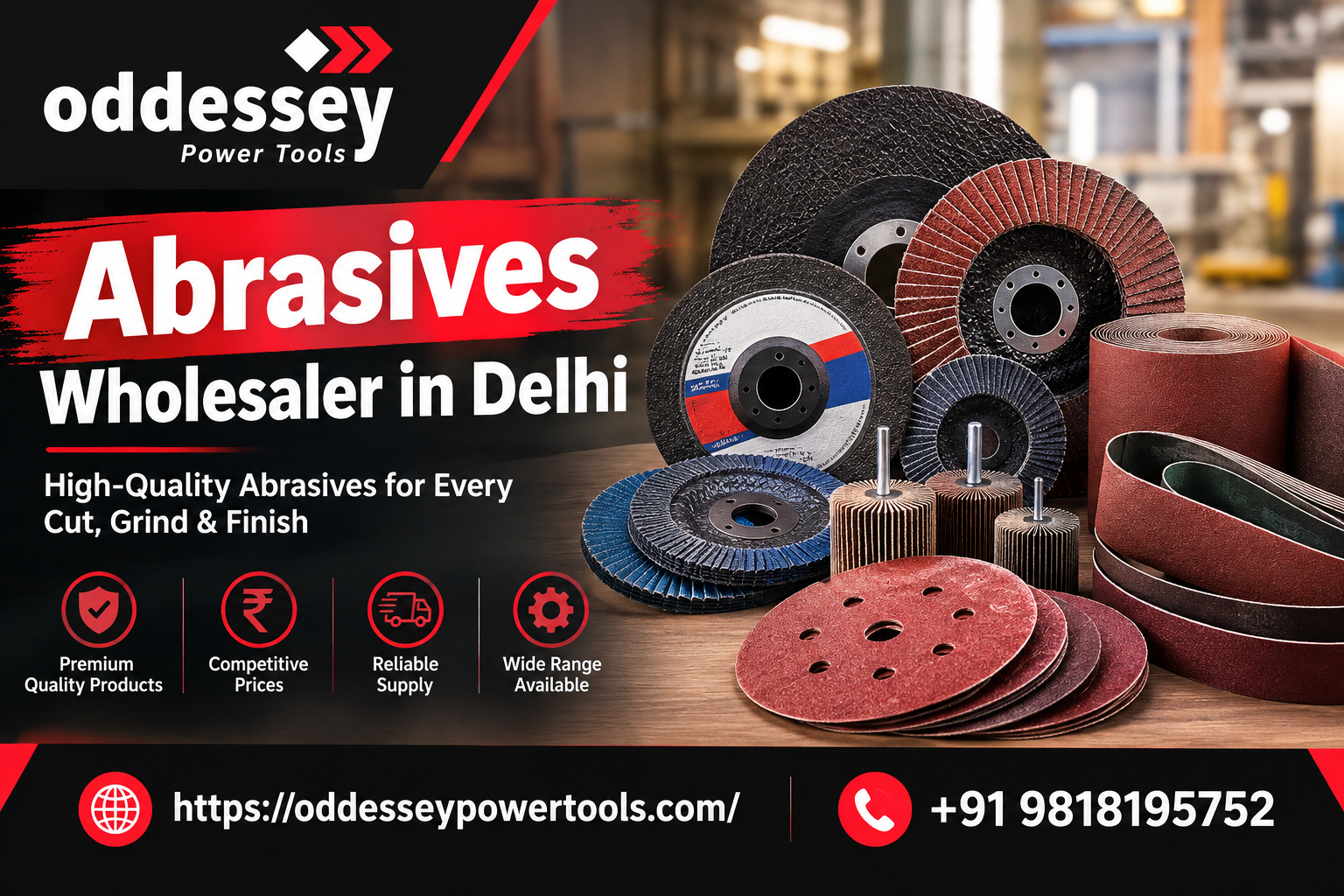
Abrasives Wholesaler in Delhi | Reliable Tools & Abrasives
If you cut, grind, sand, or finish metal, wood, marble, or stone for a living, the abrasive you choose affects almost every part of the job — how clean the cut is, how long the wheel lasts, and how much time you spend redoing work. Finding a dependable Abrasives Wholesaler in Delhi matters just as much as picking the right product, because consistent quality and steady availability keep a workshop running without unplanned delays.
This guide explains what abrasives are, how to pick the right one for your application, and what to check before you commit to a wholesale supplier.
Quick Answer
A reliable abrasives wholesaler in Delhi should offer a genuine range of abrasive products suited to different materials and applications, consistent stock availability, fair bulk pricing, accurate product guidance, and dependable order fulfilment. Buyers should also confirm that the supplier can explain which abrasive suits their specific cutting, grinding, or finishing need rather than simply selling on price alone.
What Are Abrasives and Where Are They Used?
Abrasives are materials used to cut, grind, smooth, or shape a surface through friction. They are typically bonded onto discs, wheels, belts, or sheets and used with power tools or machinery to remove material in a controlled way.
Common applications include:
- Metal fabrication — cutting sheet metal, pipes, and structural sections, and grinding welds smooth.
- Construction — cutting tiles, marble, and masonry, and surface preparation before finishing work.
- Woodworking — sanding wood surfaces before painting, staining, or polishing.
- Maintenance and repair — deburring, rust removal, and general surface cleaning.
- Workshops and fabrication units — day-to-day cutting, shaping, and finishing tasks across multiple materials.
Because the applications vary so widely, no single abrasive product works for every job. Matching the abrasive to the material and task is part of getting reliable results.
Why Choosing the Right Abrasives Matters
The abrasive you select directly affects the outcome of the work. Using the wrong grit, bond, or wheel type can lead to:
- Slower cutting or grinding speed
- A rougher or uneven finish
- Faster wear, meaning more frequent replacement
- Higher material wastage
- Increased strain on the power tool itself
On the other hand, using an abrasive suited to the material and application usually results in cleaner cuts, better finish quality, and more predictable tool life. This is why quality and correct selection — not just price — should guide a purchase decision, particularly for businesses that use abrasives regularly.
What to Look for in an Abrasives Wholesaler in Delhi
When evaluating a wholesale supplier for abrasives, it helps to look beyond price and consider the full buying experience.
| Factor | Why It Matters |
| Product range | A wider range means you can source different abrasive types for different jobs from one supplier instead of managing multiple vendors. |
| Application suitability | The supplier should be able to point you toward products suited to your material and task, not just sell whatever is in stock. |
| Product quality | Consistent quality reduces waste, rework, and unexpected tool wear. |
| Availability | Regular stock availability avoids production delays, especially for businesses with ongoing work. |
| Bulk pricing | Fair, transparent pricing for larger quantities supports better cost planning for dealers and contractors. |
| Technical guidance | Basic product information helps buyers, especially newer users, select the correct abrasive confidently. |
| Customer support | Responsive support matters when you need to reorder quickly or resolve a product query. |
| Ordering and delivery | Straightforward ordering and dependable delivery timelines matter for businesses that can’t afford downtime. |
Buyers sourcing for a hardware store, workshop, or fabrication unit typically weigh these factors together rather than choosing on a single one.
Common Types of Abrasive Products
Abrasive products generally fall into a few broad categories, each suited to different tasks:
- Grinding products — used to remove excess material, smooth welds, or shape metal surfaces.
- Cutting abrasives — designed for cutting through metal, marble, tile, or masonry with a clean edge.
- Sanding products — used for surface smoothing on wood, metal, or painted surfaces before finishing.
- Abrasive discs — used across grinders and rotary tools for a range of cutting, grinding, and finishing tasks.
The right category depends entirely on the job at hand, which is why understanding the application first makes product selection much easier.
How to Choose the Right Abrasive for Your Application
A few practical questions can help narrow down the right abrasive product:
1. What material are you working on? Metal, wood, marble, and masonry all respond differently to abrasives, and the wrong match can damage the surface or the abrasive itself.
2. Are you cutting, grinding, or finishing? Cutting abrasives are built for speed and a clean edge, grinding abrasives for material removal, and finishing abrasives for surface smoothness.
3. What surface finish do you need? Rougher grits remove material faster but leave a coarser finish; finer grits take longer but leave a smoother surface.
4. Is the abrasive compatible with your tool? Disc size, arbor size, and maximum RPM rating should match your grinder or cutting tool specifications.
5. How often will you use it? Frequent, heavy-duty use may call for abrasives built for durability, while occasional use has more flexibility.
6. What is your work environment? Dusty, wet, or high-heat environments can affect how quickly an abrasive wears down.
7. How much do you need? Estimating quantity in advance helps avoid running out mid-project and supports better bulk purchase planning.
Why Businesses Source Abrasives in Bulk
Hardware dealers, contractors, and workshops that use abrasives regularly often prefer sourcing in bulk rather than buying in small quantities as needed. Bulk sourcing typically supports:
- Consistent supply — reducing the risk of running short mid-project.
- Easier inventory planning — predictable stock levels are simpler to manage than frequent small orders.
- Operational efficiency — less time spent on repeat ordering and more time on actual work.
- Better cost planning — bulk quantities make budgeting for consumables more predictable.
For dealers who resell abrasives, working with a wholesaler that understands these needs makes day-to-day stock management considerably simpler.
Why Consider Oddessey Power Tools for Abrasive Requirements?
Oddessey Power Tools operates as a supplier of power tools and workshop essentials, with a product range that includes abrasives alongside cutting wheels, wood cutting blades, marble cutting blades, drill bits, hand tools, and related accessories. Because these categories are offered together, buyers sourcing abrasives can also address other workshop and tool requirements from the same place, which can simplify purchasing for dealers, contractors, and workshops.
If you’re specifically looking for abrasive products, you can browse the Abrasives category on the Oddessey Power Tools website, alongside related categories such as cutting wheels and drill bits, to compare what’s available for your application.
For product-specific questions or bulk requirements, reaching out directly through the contact page is the most reliable way to get accurate, current information.
Frequently Asked Questions
1. What is the difference between a grinding wheel and a cutting wheel?
A grinding wheel is designed to remove material and shape or smooth a surface, while a cutting wheel is designed to slice through material cleanly and quickly. They are built with different profiles and are not interchangeable.
2. Can the same abrasive be used on metal and marble?
Generally, no. Abrasives are engineered for specific materials, and using a metal-rated abrasive on marble (or vice versa) can produce poor results or damage the surface.
3. How do I know what grit to choose?
Coarser grits remove material faster and suit rough grinding or shaping, while finer grits are better for smoothing and finishing work. The right choice depends on your desired surface outcome.
4. Why do abrasive wheels wear out faster than expected?
This can happen due to using the wrong abrasive type for the material, applying excessive pressure, or using a low-quality product not suited to the task.
5. Is it better to buy abrasives in bulk?
For businesses using abrasives regularly, bulk buying generally supports better supply continuity and easier inventory and cost planning compared to frequent small purchases.
6. Do I need a different abrasive for wood versus metal work?
Yes. Wood sanding products and metal grinding or cutting abrasives are made differently and are not meant to be used interchangeably.
7. What should I check before buying from an abrasives wholesaler?
Check product range, availability, bulk pricing, and whether the supplier can guide you toward the right product for your specific application rather than a generic recommendation.
Conclusion
Choosing the right abrasive — and the right wholesaler — has a direct impact on work quality, tool life, and overall costs. Buyers should look for a supplier that offers a genuine range of abrasive products, consistent availability, fair bulk pricing, and practical guidance suited to their specific application.
Oddessey Power Tools offers abrasives alongside a broader range of cutting tools, drill bits, blades, and workshop accessories, making it a convenient option for dealers, contractors, and workshops looking to source multiple requirements together. Explore the Oddessey Power Tools shop or get in touch to discuss your abrasive requirements.
Contact us :- https://oddesseypowertools.com/contact-us/