Blog
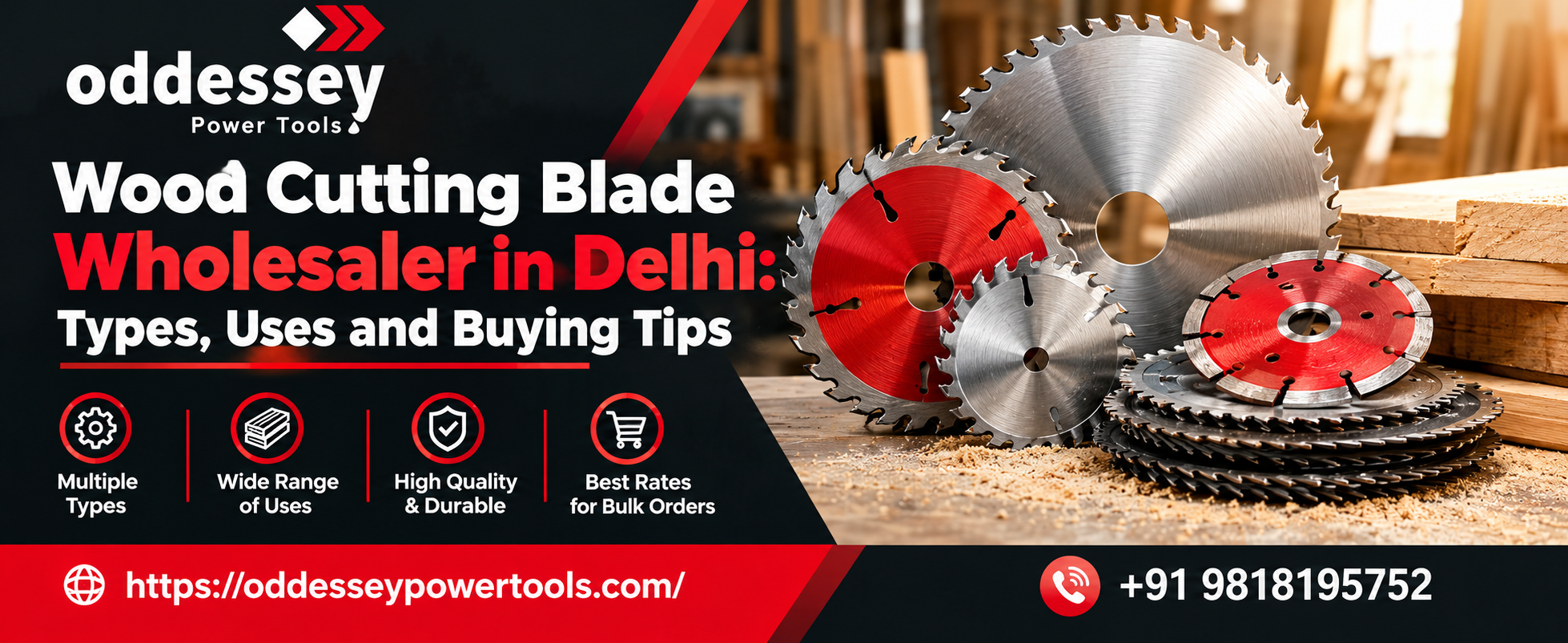
Wood Cutting Blade Wholesaler in Delhi: Types, Uses and Buying Tips
A saw blade is a small part of a woodworking setup, but it shapes almost everything that comes out of it. The right blade affects how consistent your cuts are, how clean the finish looks, how easily the material feeds through the machine, and how long the blade lasts before it needs replacing.
The catch is that no single blade suits every job. Furniture components, plywood sheets, solid timber and interior fit-out work all place different demands on a blade, and the machine you use matters just as much. That is why workshops, retailers and contractors who buy blades regularly usually look for a dependable Wood Cutting Blade Wholesaler in Delhi rather than picking up whatever is available each time. This guide covers the basics: what to look for, how tooth count works, and what to check before you place a bulk order.
What Is a Wood Cutting Blade?
A wood cutting blade is a toothed cutting tool, usually a circular disc, that removes material as it moves through wood or wood-based boards. Each tooth takes a small bite, and the number, shape and spacing of those teeth influence how the blade cuts.
Choosing one is not just a matter of picking a size. Buyers should think about the material being cut, the type of work, the finish required, blade dimensions, tooth count, machine compatibility and how often the blade will be used. Getting these basics right saves time, material and money later.
Understanding Different Types of Wood Cutting Blades
Instead of assuming one blade fits every task, it is better to choose by application. Here is how buyers typically think about the main categories.
Blades for General Wood Cutting
These are used for everyday cutting jobs in workshops and job sites, where the aim is a dependable all-round option for common woodworking tasks.
Blades for Furniture and Carpentry Work
Furniture components and carpentry joints need controlled, consistent cuts. Poor cuts mean extra sanding, rework or mismatched parts, so blade choice matters here.
Blades for Plywood and Engineered Wood
Plywood and engineered boards behave differently from solid timber because of their layered or composite structure. Always check that a blade is suitable for the board you are cutting before using it in production.
Blades for Professional and Workshop Applications
Workshops that cut daily may need several blade options to cover different machines, materials and production needs. Keeping a few suitable variants on hand makes it easier to switch between jobs.
Understanding Tooth Count in Wood Cutting Blades
Tooth count is simply the number of teeth on the blade, written with a “T”. A blade marked 30T has 30 teeth.
As a general rule, a lower tooth count means fewer, larger gaps between teeth, which is often chosen where faster material removal matters more than finish. A higher tooth count means more teeth in contact with the wood, which is often chosen where a smoother cut is wanted. These are general tendencies, not guarantees. The actual result also depends on the material, the machine and how the blade is used.
The Oddessey Platinum Wood Cutting Blade is listed on the official product page in these variants: 4×12T, 4×30T, 4×40T, 5×12T, 5×30T and 5×40T. The notation pairs a size figure with the tooth count. Before ordering, confirm the exact blade dimensions with the supplier so there is no ambiguity about fit.
Table 1: Wood Cutting Blade Options and Typical Considerations
| Blade Option | Tooth Count | Selection Consideration | Buyer Should Check |
| 4×12T | 12T | Consider where a lower tooth count may suit the application | Material, machine and cutting requirement |
| 4×30T | 30T | Consider for applications needing a mid-range tooth configuration | Machine compatibility and desired finish |
| 4×40T | 40T | Consider where a higher tooth count may suit the application | Material and required cut quality |
| 5×12T | 12T | Evaluate according to blade size and application | Machine compatibility |
| 5×30T | 30T | Compare with the other available tooth configurations | Material and cutting requirement |
| 5×40T | 40T | Consider when the application calls for this configuration | Machine specifications and intended use |
No tooth count is “best” for everything. The right choice is the one that fits your material, machine and finish requirement.
Applications of Wood Cutting Blades
Furniture manufacturing. Furniture parts need to be cut consistently so they fit together properly.
Carpentry. Carpenters handle varied jobs and rely on blades that behave predictably across different tasks.
Interior and construction work. Interior projects and construction sites often involve cutting wood and wood-based boards in repetitive quantities, where blade durability and compatibility with site machines become important.
Workshops. A workshop may run different machines and process different materials in the same week, so having suitable blade variants available helps keep work moving.
Retail and distribution. Hardware retailers and tool distributors serve customers with varied needs, so they benefit from reliable wholesale sourcing and a range of blade options.
Table 2: Wood Cutting Blade Applications
| Application | Typical Requirement | What Buyers Should Consider |
| Furniture Manufacturing | Consistent cutting of wood components | Blade configuration and machine compatibility |
| Carpentry | Reliable cutting for different woodworking jobs | Material and required finish |
| Interior Work | Cutting wood and suitable boards | Application and machine type |
| Construction | Repetitive wood cutting | Blade durability and compatibility |
| Workshops | Regular cutting across different jobs | Availability of suitable blade variants |
| Retail/Distribution | Multiple customer requirements | Product variety and reliable supply |
How to Choose the Right Wood Cutting Blade
Work through these factors in order and the decision usually becomes straightforward.
- Material type. Decide whether you are cutting solid wood, plywood or another wood-based material.
- Blade size. The blade must suit your machine and the job.
- Tooth count. Match it to the cutting characteristics and finish you need.
- Machine compatibility. Verify fit with your saw or cutting equipment before buying, not after.
- Required finish. Some jobs prioritise speed, others surface quality.
- Frequency of use. A busy workshop has different sourcing needs than an occasional user.
- Quantity required. For bulk orders, think about supply consistency and availability, not only the first batch.
Why Buy Wood Cutting Blades from a Wholesaler in Delhi?
For businesses that use or resell blades regularly, buying through a wholesaler or established supplier makes practical sense. Bulk purchasing is simpler, you can access several blade variants in one place, and repeat orders are easier when you know where to reorder. Local sourcing in Delhi can also be more convenient for workshops and retailers who want to discuss requirements directly.
Details like pricing, delivery time and stock levels should always be confirmed directly with the supplier before ordering.
What to Check Before Buying Wood Cutting Blades in Bulk
A bulk order is harder to correct than a single purchase, so confirm these first:
- Blade dimensions
- Tooth count
- Machine compatibility
- Intended wood or material
- Required cutting finish
- Quantity required
- Product availability
- Supplier reliability
- Packaging
- Reordering convenience
- Customer support
- Product information
If any specification is unclear, ask the supplier to confirm it in writing before placing the order.
Table 3: Wholesale Wood Cutting Blade Buying Checklist
| Buying Factor | Question to Ask | Why It Matters |
| Blade Size | Is the blade compatible with my machine? | Prevents compatibility issues |
| Tooth Count | Which tooth configuration suits my application? | Helps match the blade to the cutting requirement |
| Material | What wood or board will be cut? | Different materials may require different considerations |
| Quantity | How many blades are needed? | Helps plan wholesale purchasing |
| Application | Furniture, carpentry, construction or workshop use? | Clarifies the appropriate product requirement |
| Supplier | Can the supplier provide the required variant consistently? | Supports repeat purchasing |
| Product Details | Are specifications clearly provided? | Helps buyers make an informed decision |
| Support | Can the supplier help with product selection? | Useful when requirements are unclear |
Why Consider Oddessey Power Tools?
Oddessey Power Tools lists its wood cutting blades through its website, with the Oddessey Platinum Wood Cutting Blade available in the six variants covered above: 4×12T, 4×30T, 4×40T, 5×12T, 5×30T and 5×40T. The company also lists other blade ranges, such as the Oddessey Eco Series, so buyers can compare options.
According to the product page, Oddessey positions its blades for woodworking needs including furniture manufacturing, construction and interior projects, and describes them as suitable for work with hardwood, plywood and engineered boards, across handheld tools, table saws and industrial machines. As with any product, buyers should still confirm suitability for their own machine and material.
For businesses looking for wood cutting blade options in Delhi, Oddessey Power Tools is worth considering, especially if you want to discuss variants, quantities and applications with a supplier directly.
Frequently Asked Questions
1. What is the difference between 12T, 30T and 40T blades?
The number refers to the teeth on the blade. Generally, lower tooth counts are chosen where faster cutting matters more, and higher counts where a smoother cut is preferred. The right option still depends on your material, machine and application.
2. Which Oddessey Platinum Wood Cutting Blade variants are available?
The official product page lists 4×12T, 4×30T, 4×40T, 5×12T, 5×30T and 5×40T.
3. How do I know if a blade will fit my machine?
Check the blade dimensions against your saw’s specifications and confirm with the supplier before ordering.
4. What should I check before ordering wood cutting blades in bulk?
Confirm size, tooth count, machine compatibility, material, quantity, availability and supplier support, and get any unclear specification confirmed first.
5. How can I contact Oddessey Power Tools for wood cutting blade requirements?
Call +91 9818195752 or email connect@oddesseypowertools.com. The address is Modern Impex, 3268, 1st Floor, Gali Raja Wali, Peepal Mahadev, Hauz Qazi, Delhi-110006.
Get Help Choosing the Right Blades
Choosing the right blade comes down to matching it to your material, machine and workload. If you are looking for a Wood Cutting Blade Wholesaler in Delhi, Oddessey Power Tools can help you select and source suitable options.
When you get in touch, it helps to share:
- Required blade size
- Tooth count
- Machine or application
- Material being cut
- Required quantity
Tel: +91 9818195752
Email:connect@oddesseypowertools.com
Address: Modern Impex, 3268, 1st Floor, Gali Raja Wali, Peepal Mahadev, Hauz Qazi, Delhi-110006