Blog
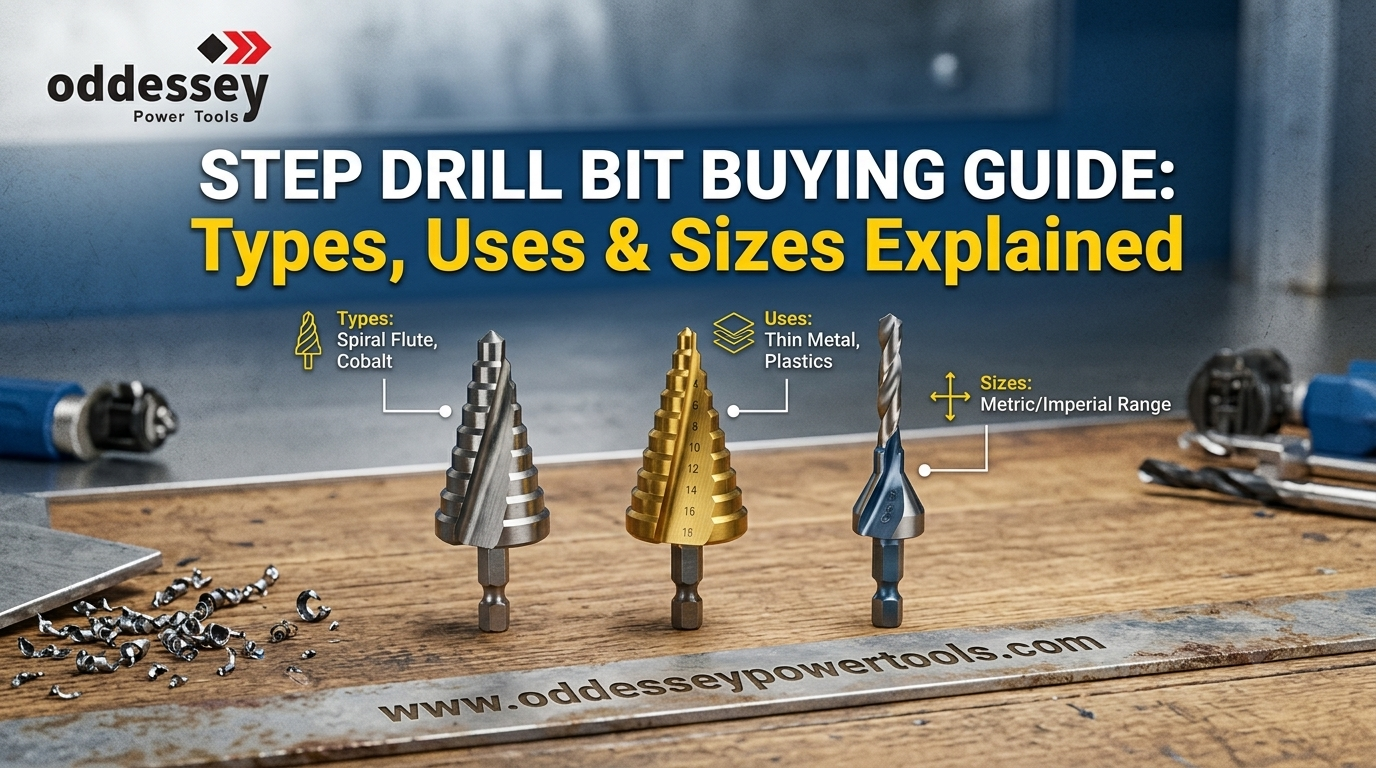
Step Drill Bit Buying Guide: Types, Uses & Sizes Explained
If you have ever tried to drill a clean, burr-free hole in sheet metal, an electrical panel, or a thin aluminium bracket, you already know how frustrating a standard twist drill can be. It grabs the material, leaves rough edges, and forces you to keep swapping bits every time you need a slightly larger hole. This is exactly the problem a step drill bit was designed to solve.
This guide breaks down everything you need to know before you buy what a step drill bit is, the different types available, how sizing works, where each type is best used, and how to pick the right one for your job. Whether you are an electrician, a fabricator, an HVAC technician, or a DIY enthusiast planning to buy a step drill bit online in Delhi, this article will help you make an informed decision without any guesswork.
We have also kept this guide practical and easy to follow, with comparison tables so you can quickly match a bit to your project instead of reading through pages of technical jargon.
What Is a Step Drill Bit?
A step drill bit also known as a unibit, stepped drill bit, or multi-diameter drill bit — is a cone-shaped cutting tool with a series of progressively larger diameters machined into a single shank. Instead of carrying five or six separate twist bits to drill different hole sizes, a single step bit lets you produce multiple hole diameters with one tool.
Each “step” on the bit corresponds to a specific, fixed diameter. As the bit advances into the material, it cuts a slightly larger hole at every step. You simply stop drilling once the step matching your required size has fully passed through the workpiece, and that becomes your final hole diameter.
This design makes step drill bits especially popular among electricians, panel fabricators, HVAC installers, plumbers, and metalworking hobbyists who regularly need clean, precise holes in thin materials.
How Does a Step Drill Bit Work?
Unlike a twist drill, which cuts a single, fixed-diameter hole along its entire length, a step drill bit works in stages:
- The pointed tip centres itself on the marked spot and begins cutting the smallest diameter first.
- As you apply steady, controlled pressure, the bit passes through progressively wider steps.
- Each step shears through the material cleanly, often eliminating the need for a separate deburring step.
- You stop drilling as soon as the step matching your target hole size has fully broken through the far side of the material.
Because the cutting action is gradual, step drill bits produce far less vibration and burring than twist bits, especially on thin gauge metal, plastic sheets, and softwood panels.
Types of Step Drill Bits
Step drill bits are generally categorised by three factors: the material they are made from, the flute design, and the shank type. Understanding these categories is the single most important step before you buy.
1. By Material
| Material Type | Best For | Key Characteristics |
| High-Speed Steel (HSS) | Mild steel, aluminium, plastic, wood | Affordable, durable for general-purpose use, widely available |
| Titanium-Coated HSS | Sheet metal, stainless steel (light duty) | Reduced friction, longer edge life, resists heat build-up |
| Cobalt (HSS-Co) | Stainless steel, harder alloys | Excellent heat resistance, holds a sharp edge longer under heavy use |
| Black Oxide Coated | General metal and wood work | Corrosion resistant, smoother finish, budget-friendly upgrade over plain HSS |
If you mostly work with mild steel, aluminium, or plastic enclosures, a standard HSS bit is usually sufficient. For stainless steel or repeated heavy-duty use, cobalt or titanium-coated variants last significantly longer.
2. By Flute Design
| Flute Type | Description | Ideal Use Case |
| Straight (Single) Flute | One straight cutting edge along the cone | Thin sheet metal, plastic — cleaner finish, less self-feeding |
| Spiral (Double) Flute | Helical cutting edges that pull the bit forward | Faster cutting, efficient chip clearing, preferred for regular trade use |
Straight-flute bits give you more control on very thin materials because they do not “grab” the workpiece as aggressively. Spiral-flute bits, on the other hand, clear chips faster and are better suited for repeated, high-volume drilling.
3. By Shank Type
- Round Shank – Fits any standard drill chuck, ideal for drill presses and general use.
- Hex Shank – Designed for impact drivers and quick-change chucks, offering a firmer grip and reduced slippage under torque.
Step Drill Bit Sizes Explained
Step drill bit sizing can look confusing at first, but it is straightforward once you understand the notation. A bit labelled, for example, 4-20mm starts cutting at 4mm and increases in fixed increments (commonly 1mm or 2mm) up to 20mm, giving you multiple precise hole sizes on a single tool.
| Size Range | Typical Number of Steps | Common Applications |
| 4mm – 12mm | 4-6 steps | Small electrical knockouts, thin bracket work, hobby projects |
| 4mm – 20mm | 8-9 steps | Conduit knockouts, switchboard panels, general sheet metal |
| 4mm – 32mm | 12-13 steps | Larger enclosure cutouts, HVAC ducting, bigger conduit fittings |
| 6mm – 38mm | Variable steps | Heavy-duty industrial panels, large diameter requirements |
Each step is machined to an exact diameter, so you get precise, repeatable hole sizes rather than approximate measurements, a major advantage over trying to “eyeball” a hole with a twist drill.
Common Applications and Industries That Use Step Drill Bits
Step drill bits are not a niche too they are used across a wide range of trades and applications because of their versatility and time-saving design.
| Industry / User | Typical Application |
| Electricians | Drilling knockouts in panels, enclosures, and conduit boxes |
| HVAC Technicians | Creating clean holes in ducting and thin metal housings |
| Plumbers | Enlarging existing holes, fitting pipe grommets |
| Sheet Metal Fabricators | Precision holes in mild steel, stainless steel, and aluminium sheets |
| DIY & Hobbyists | Home repairs, craft projects, automotive sheet metal work |
| Maintenance Crews | Quick on-site repairs without carrying multiple twist bits |
Beyond drilling new holes, step drill bits are also widely used for deburring rough edges and enlarging existing holes without switching to a different tool a huge time-saver on the job site.
How to Choose the Right Step Drill Bit
Picking the right step drill bit comes down to four practical decisions:
1. Match the Diameter Range to Your Job Don’t buy the largest bit available just in case. A bit with an oversized top step can be harder to control at smaller diameters. Choose a range that closely matches the holes you drill most often.
2. Choose the Right Material for Your Workpiece Use standard HSS for mild steel, aluminium, and plastic. Upgrade to cobalt or titanium-coated bits if you regularly work with stainless steel or harder alloys.
3. Pick the Correct Flute Design Spiral flutes suit regular, repeated trade use thanks to efficient chip clearance. Straight flutes offer more control on very thin or delicate materials.
4. Match the Shank to Your Drill If you primarily use an impact driver, a hex-shank bit will grip more securely. For drill presses or standard chuck drills, a round shank works perfectly well.
Buying from a trusted supplier also matters just as much as picking the right specifications. Poorly manufactured step bits dull quickly, wander off-centre, and can even damage your workpiece. This is where sourcing your tools from a reliable name like Oddessey Power Tools makes a real difference every bit is built to consistent quality standards, so the sizing and finish you expect is exactly what you get.
Step Drill Bit vs Twist Drill vs Hole Saw
A common question buyers ask is when to use a step drill bit instead of a twist drill or hole saw. Here’s a simple comparison to help you decide:
| Feature | Step Drill Bit | Twist Drill | Hole Saw |
| Best Material Thickness | Thin sheet metal, plastic (up to ~6mm) | Thick or solid material | Thick material, large diameter holes |
| Multiple Hole Sizes on One Tool | Yes | No | No |
| Deburring Capability | Yes, built-in | No | Limited |
| Precision on Thin Material | Excellent | Prone to grabbing/tearing | Not ideal for very thin sheets |
| Ideal Hole Diameter | Small to medium (up to – 40mm) | Small to medium | Medium to large (25mm and above) |
In short: use a step drill bit for thin materials and variable hole sizes, a twist drill for solid or thicker stock, and a hole saw when you need large-diameter holes in thicker panels.
Tips for Using Step Drill Bits Safely and Effectively
- Secure the workpiece with a vice or clamp before drilling this prevents the material from spinning and improves accuracy.
- Mark your center point clearly with a punch or marker for a cleaner start.
- Apply steady, moderate pressure – forcing the bit can overheat it or crack the material.
- Watch the depth carefully as you approach your target step; it’s easy to overshoot on thin material.
- Use cutting fluid or lubricant on metal for a smoother cut and longer bit life.
- Wear safety glasses – step bits throw sharp metal shavings, so eye protection is essential.
- Deburr the finished hole with a file for a clean, professional edge.
Why Buy Your Step Drill Bit From Oddessey Power Tools
Choosing the right step drill bit is only half the job buying it from a dependable source is what determines how well it performs over time. Oddessey Power Tools is built around that reliability. Every step drill bit is manufactured to consistent diameter tolerances, so each step cuts the exact size it claims to, without the wobble or inaccuracy that cheaper, unbranded bits often show.
If you are looking to buy a step drill bit online in Delhi, Oddessey Power Tools offers a genuine, quality-checked range covering different materials, flute designs, and shank types so you can pick a bit that is actually suited to your project rather than settling for a generic, one-size-fits-all option. With straightforward online ordering and dependable delivery across Delhi, it’s a practical choice whether you’re stocking a professional toolkit or picking up your very first step bit for home projects.
Oddessey Power Tools at a Glance
| Metric | Figure |
| Customers & Growing | 875k |
| Items Sold | 875k |
| Market Growth | 18% |
These numbers reflect a growing base of electricians, fabricators, and DIY buyers across Delhi who rely on Oddessey Power Tools for consistent quality and dependable service one of the reasons the brand continues to see steady year-on-year market growth.
Visit or reach out to us at: Modern Impex, 3268, 1st Floor, Gali Raja Wali, Peepal Mahadev, Hauz Qazi, Delhi-110006
Common Mistakes to Avoid When Using Step Drill Bits
Even a high-quality step drill bit can underperform if it’s used incorrectly. Here are the most common mistakes buyers and users run into, along with how to avoid them:
- Drilling at high speed on metal. Step bits perform best at moderate, controlled speeds. Running them too fast on metal generates excess heat, which dulls the cutting edges quickly and can discolour the workpiece.
- Skipping lubrication on metal surfaces. A drop of cutting oil reduces friction significantly and extends the life of the bit, especially on stainless steel or cobalt applications.
- Not securing the workpiece. Thin sheet metal or plastic can spin or vibrate if it isn’t clamped down, leading to inaccurate holes or a damaged bit.
- Overshooting the required step. Because the diameter increases gradually, it’s easy to push slightly too far and end up with a larger hole than intended. Go slow as you approach your target size.
- Ignoring flute type for the material. Using a spiral-flute bit on very thin material can cause it to self-feed too aggressively, tearing rather than cutting cleanly. Match the flute design to your material as outlined earlier in this guide.
- Buying based on price alone. Unbranded, poorly ground bits often have inconsistent step diameters, meaning the hole you drill may not match the size marked on the bit. This is one of the biggest reasons to buy from a quality-focused supplier.
Maintenance and Storage Tips for Longer Bit Life
A step drill bit is an investment, and a little care goes a long way in extending its usable life:
- Clean after every use. Wipe away metal shavings and cutting oil residue to prevent corrosion, particularly on uncoated HSS bits.
- Store in a dry, dedicated case. Step bits are typically sold with a fitted case use it. Loose storage with other tools can chip or dull the cutting edges.
- Avoid excessive heat build-up. If a bit becomes too hot to touch during use, pause and let it cool. Repeated overheating is one of the fastest ways to shorten a bit’s lifespan.
- Inspect the tip regularly. A worn or chipped tip will cause the bit to wander off-centre. Replace the bit once you notice consistent inaccuracy or excessive resistance while drilling.
- Deburr as you go. Removing burrs immediately after drilling keeps the finished hole cleaner and reduces wear from repeated adjustments later.
FAQ
Q1. What is a step drill bit used for?
A step drill bit is used to drill multiple hole diameters in thin materials like sheet metal, plastic, and wood using a single tool, and is also useful for deburring and enlarging existing holes.
Q2. Can a step drill bit be used on thick steel?
No. Step drill bits are best suited for thin materials, typically up to around 6mm. For thicker plate or structural steel, a twist drill or annular cutter is a better choice.
Q3. Which is better — cobalt or titanium-coated step drill bits?
Cobalt bits handle heat and hard metals like stainless steel better over long-term, heavy use, while titanium-coated HSS bits are a cost-effective option for lighter, occasional stainless steel work.
Q4. How do I know what size hole a step drill bit will make?
Each step on the bit corresponds to a specific, marked diameter. You stop drilling once the required step has fully passed through the material, and that becomes your final hole size.
Q5. Is a spiral flute or straight flute step a bit better?
Spiral flutes are better for regular trade use because they clear chips efficiently, while straight flutes offer more control and a cleaner finish on very thin or delicate materials.
Summary
Step drill bits are a versatile, time-saving alternative to carrying multiple twist bits, especially when working with thin sheet metal, plastic, or wood. They come in different materials (HSS, cobalt, titanium-coated), flute designs (straight or spiral), and shank types (round or hex) and choosing the right combination depends on the material you drill most often and how frequently you use the tool. Understanding size notation, matching the bit to your job, and buying from a trusted supplier are the three factors that make the biggest difference in performance and durability.
Conclusion
A good step drill bit can genuinely transform how you approach drilling thin materials, saving time, reducing tool clutter, and delivering cleaner results than a standard twist drill ever could. The key is matching the right material, flute design, and size range to your specific work, rather than picking the first bit you come across.
If you’re ready to upgrade your toolkit,Oddessey Power Toolsoffers a dependable, quality-focused range to help you buy a step drill bit online in Delhi with confidence so you spend less time troubleshooting tools and more time getting the job done right.
About the Author
Nitin Owner, Oddessey Power Tools. With hands-on experience in the power tools industry, Nitin leads Oddessey Power Tools’ mission to bring genuine, quality-checked tools to electricians, fabricators, and DIY users across Delhi. He writes buying guides and product insights drawn directly from real customer needs and industry experience.